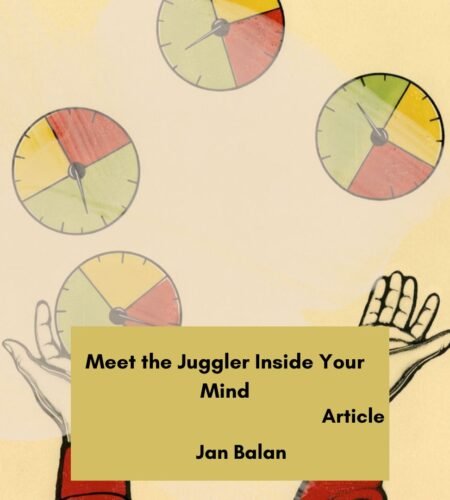
A Table Topics speaker is often like a juggler trying to keep too many balls in the air. One ball is grammar. Another is vocabulary. A third worries about eye contact. Then come posture, timing, audience reaction, and the fear of forgetting everything. Somewhere among all these flying balls, the speaker is also expected to think of an answer. No wonder many people freeze.
I once watched a participant during a Table Topics session. The topic was simple: “A memorable journey.” The speaker walked confidently to the front, smiled at the audience, and then paused for several seconds. After the session, the speaker admitted, “I had too many thoughts. I did not know which one to choose.” That sentence stayed with me because it captures the experience of many impromptu speakers.
Most speakers do not struggle because they lack ideas. They struggle because they have too many ideas competing for attention. The same thing happens outside Toastmasters. A school student knows the answer but hesitates when asked to explain it before the class. A college student presenting a seminar suddenly becomes conscious of pronunciation, grammar, and audience reactions. A manager in a review meeting begins answering a question but simultaneously worries about wording, tone, and how the response will be received.
Thinking and speaking have to happen together. At first, this feels unnatural. Thoughts run in different directions like children rushing out of school after the final bell. Speakers try to chase every idea and often end up losing the most important one. The mind becomes crowded, and the response loses clarity.
This is where Table Topics help. Regular practice teaches us to simplify. Instead of juggling ten ideas, we learn to hold on to one. We begin with a personal experience, add an example, and conclude with a lesson. Slowly, the juggler becomes more skilful, and the brain learns rhythm.
Over time, thoughts stop running wild and begin walking in lines. Speaking becomes less about managing chaos and more about sharing one meaningful idea. That is why Table Topics are not merely speaking exercises. They are exercises in thinking. And in a world full of unexpected questions, learning to think while speaking is a skill worth developing.
Speaking without preparation can feel uncomfortable, but it is a skill that can be developed one conversation at a time. This article is part of an ongoing series on Table Topics, impromptu speaking, and the hidden skills that help us think and speak with confidence.
Missed the earlier articles?
Article 1: Table Topics is Not a Game. It is Survival Training.
Article 2: When your mind becomes a traffic signal
Article 3: https: The Stories Hidden in Everyday Life
Do follow me in instagram
Subscribe to our email newsletter to get the latest posts delivered right to your email.
Comments