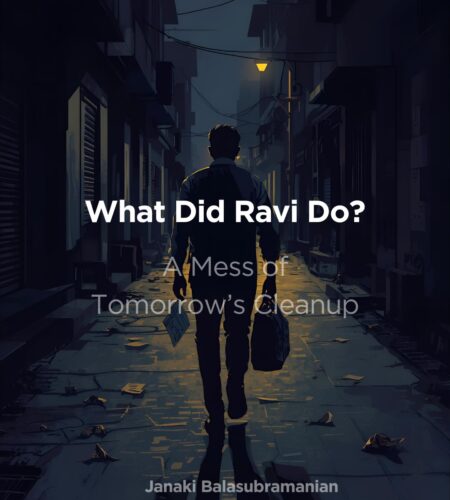
Ravi steps inside the doorway. He notices the “Welcome” sign on the door, bold and shiny. As he enters, the air shifts, crisp, humming with an almost electric silence. Before him stretches a cityscape unlike any he’s seen. The streets are spotless, gleaming as if freshly washed by rain. Then he notices the source of the magic: a sleek, spider-like drones glide silently over the ground, scanning, lifting, and swallowing bits of waste. Even the tiniest leaf doesn’t remain long on the pavement.
One drone pauses nearby. A candy wrapper flutters from nowhere, and the drone swoops down, grabs it, and dissolves it into thin air with a soft blue glow. A voice hums through hidden speakers: “Environmental maintenance complete. Clean zones preserved.” Ravi’s jaw drops. No overflowing bins. No piles of rot or stink. No crows or stray dogs tearing at bags.
But it’s not just the roads, trees along the path look healthier, leaves a deep green. The air smells of rain-soaked earth. He can hear children laughing somewhere distant, their footsteps echoing without crunching on debris. It feels perfect, almost unreal.
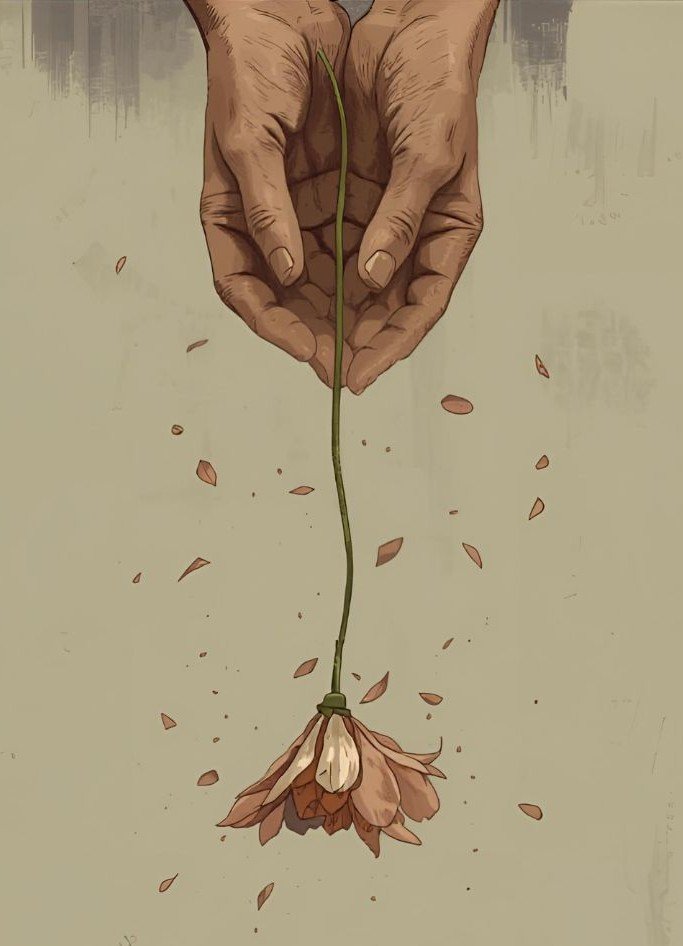
Just then, a soft plop breaks the silence. A single yellow flower falls from a nearby tree and lands at his feet. The drones don’t move for it, maybe it’s too small, maybe they’ve missed it, maybe they test him. Ravi bends down and picks up the delicate bloom. Its petals feel warm, almost alive.
This future world doesn’t need reminders or warnings, the technology has replaced human effort. But as Ravi stands there, flower in hand, he senses something: machines can clean, but responsibility still begins with people. His next move will say what kind of person he is. His confusion gives him two options, toss it to ground ot toss it in dustbin
Subscribe to our email newsletter to get the latest posts delivered right to your email.
Comments